
WMS: The Bigger Fiscal Picture
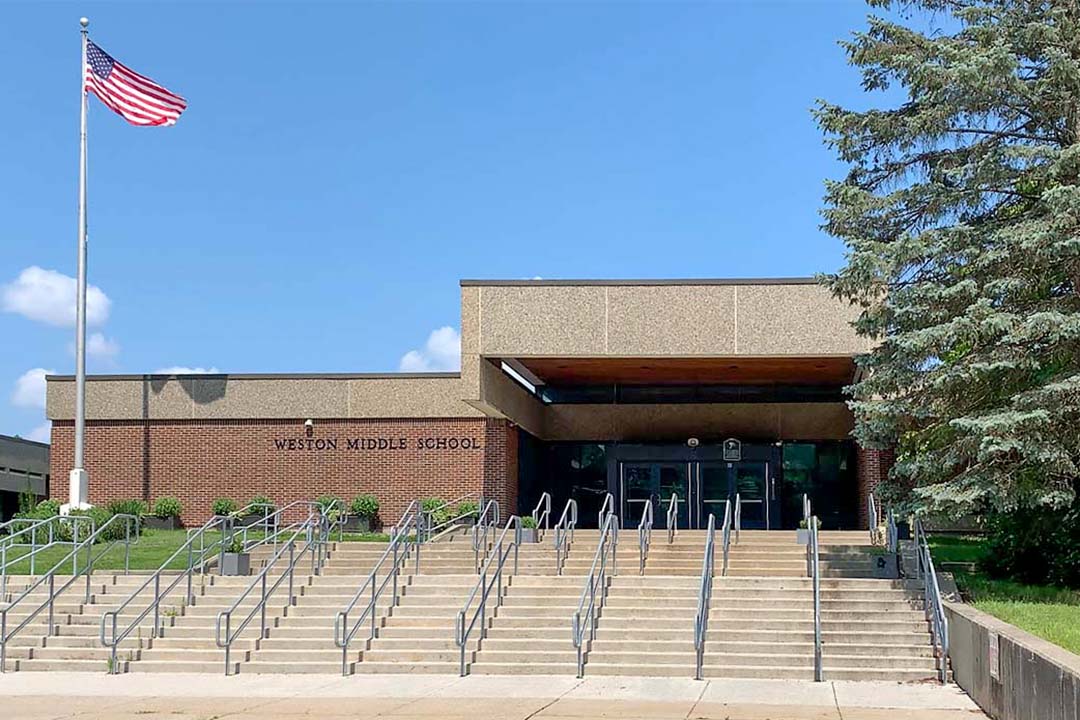
Weston Today photo
On Wednesday evening, members of Weston’s big-three Town boards — Selectmen, Education, and Finance — heard an analysis of where the town’s debt and tax rate could go over the next decade if:
- A new Weston Middle School is built, at a total cost (before reimbursements) of $128 million.
- Or if the school gets a less ambitious “small R” renovation — now referred to as a “lighter touch” — which, it turns out, is estimated to cost almost as much as a new building.
- And if another $92 million is spent on other capital improvements already identified as needed at the schools and by the Town.
- And if operating and capital budgets and the Grand List continue to rise at about their typical rates.
All combined, according to the analysis by the Board of Finance’s debt capacity subcommittee, within five years the property tax bill on the median-valued Weston home could be at least $5,000 higher than it is today. Ten years from now it could be $8,000 higher than today, at which point it would begin to decline.
By 2036, the town would carry a debt balance between $117 million and $122 million.
The subcommittee’s analysis puts into frame the question of how a school construction project fits in the bigger capital picture, a context absent in the Board of Education’s 2024 proposal that surfaced with speed and sank even faster.
The full analysis, summarized in the meeting by finance board chair Michael Imber, is highly detailed, includes multiple scenarios, and is heavily qualified. And probably wrong.
Mr. Imber acknowledged that, like any long-term forecast, the analysis is hypothetical, assumption-driven, may change going forward, and will be revised in the future as new information comes in. He emphasized that it does not constitute an approval by any board.
The path ahead
At the conclusion of the meeting, First Selectwoman Samantha Nestor said more tri-board sessions are to come and that an advisory group, consisting of the chairs of each board plus one member, will work over the summer to reach consensus on a timeline and a plan to get community input later in the year.
She added that the group will have to come up with ideas for constructing a case that could be taken to the Legislature for additional State assistance.
By the book, constructing a new school in Weston would qualify for only 12.5 percent State reimbursement, a figure that would drop closer to 10 percent because the size of the building as currently conceived is larger than a State standard.
From time to time, by Special Act, the Legislature gives new construction the same reimbursement rate that is applied to renovation-as-new, which in Weston’s case would be 22.14 percent.
Legislators have also been known to waive the size standard, which inadvertently penalizes small school districts and a middle school’s team teaching model.
Both exceptions require a compelling rationale.